Bio Safety Cabinet (BSC) Testing & Certification
Routine biosafety cabinet certification is vital to the safety of your lab, as well as the quality of your research. SEPS will repair, decontaminate, and certify all classes of BSCs. All biological safety cabinets are certified to meet NSF-49 F guidelines and manufacture specifications.
Fume Hood/ASHRAE-110 Testing & Certification
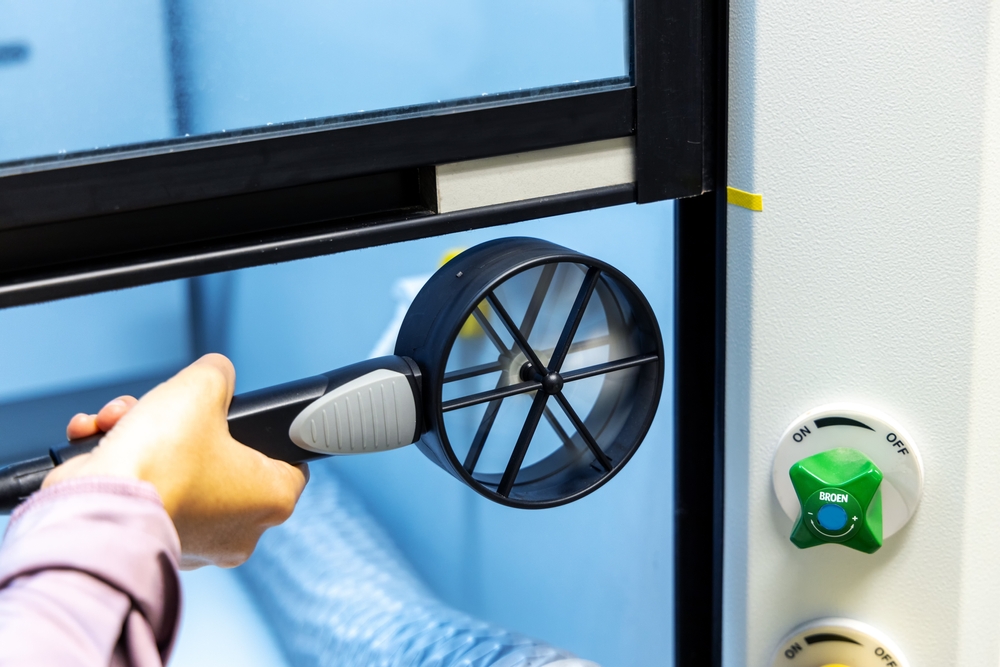
Fume hoods (FH) protect your lab personnel from vapors, fumes, and aerosols. Regular testing and certification of fume hoods will regulate exposure prevention and ensure operator safety.
Centrifuge Testing, Calibration, & Certification
Centrifuges are often used in laboratory settings where workers must isolate certain biological components for testing. At SEPS, our expert technicians have years of experience testing and certifying centrifuges to guarantee optimal performance.
Animal Research Testing & Certification
We offer testing of animal transfer stations, waste disposal units, necropsy units, and clean benches. Periodic certification is necessary and will provide proper operation and safety for your lab animals.
Laminar Flow Units (LFU) Testing & Certification
Laminar flow units (also known as Clean Benches) provide protection of your products. SEPS will test and certify your LFU to (IEST) Institute of Environmental Sciences and Technology guidelines and recommended practices.
What is Lab Equipment Testing and Certification?
Lab equipment testing is the process of evaluating laboratory instruments to ensure they perform to manufacturer specifications and industry standards. Lab equipment certification is the formal documentation issued after testing that verifies a piece of equipment meets required performance, safety, and accuracy thresholds. Certification is not only a best practice — many labs in New York and nationwide require certified equipment to satisfy accreditation bodies, grant conditions, and internal quality systems.
Why Certification Matters
Certification protects data integrity and reduces the risk of erroneous results that can compromise research, clinical decisions, or product quality. For regulated facilities—clinical labs, pharmaceutical QC, biobanks, and academic research centers—certified equipment helps demonstrate compliance with recognized standards such as ISO/IEC 17025, GLP (Good Laboratory Practice), and instrument-specific guidance (e.g., USP, CLSI). In New York, where research and healthcare institutions face rigorous oversight, maintaining current certification records simplifies audits and inspections.
Common Types of Lab Equipment We Test & Certify
- Ultra-low temperature (ULT) freezers and laboratory refrigerators
- Centrifuges and refrigerated centrifuges
- Biological safety cabinets and fume hoods
- Analytical balances and scales
- pH meters, incubators, and ovens
- Autoclaves and sterilizers
- Environmental chambers and stability units
- Liquid handling systems and pipettes
How to Schedule Lab Equipment Testing and Certification Services
- Intake & Scheduling: We coordinate with your lab to schedule testing with minimal disruption to workflows.
- Pre-test Inspection: Technicians perform a visual and operational check and identify any immediate safety concerns.
- Calibration & Functional Testing: Instruments are tested against traceable standards (where applicable) and adjusted if needed.
- Documentation: A detailed test report and certificate are issued, including measured values, tolerances, adjustments made, and next due-date for recertification.
- Follow-up & Repair: If an instrument fails, we provide repair estimates, replacement parts, and re-testing to restore compliance.
Submit Your Work Order Request Now
NY Lab Testing and Certifications: Standards, Traceability & Record-keeping
Good certification practices rely on traceable standards and documented procedures. Our calibrations reference NIST-traceable artifacts where appropriate and include temperature/pressure/weight traceability records. Comprehensive record-keeping ensures your lab can show consistent maintenance histories during audits, grant reporting, or internal quality reviews.
Benefits of Regular Lab Equipment Testing
Routine certification minimizes instrument downtime, reduces sample loss, and extends equipment lifespan. It also helps pinpoint drifting performance early so repairs can be scheduled during planned maintenance windows. From a risk-management perspective, certified instruments reduce the chance of costly rework, invalidated experiments, and non-conformances discovered during inspections.
SEPS Services Approach
SEPS Services specializes in lab equipment certification across New York. We offer flexible service options—one-time certifications, emergency on-site repairs, and ongoing service contracts through our Certification Professional Management Program. For the majority of repairs, replacement parts are readily available from our stocked inventory, which helps us keep equipment downtime to a minimum. We also provide expedited service within 24 hours for urgent situations.
Our Certification Professional Management Program centralizes your equipment records, schedules proactive recertification, and streamlines compliance reporting so your quality team can focus on science, not paperwork. Whether you run a single lab bench or manage a multi-site research network in New York, our technicians are experienced with the instruments and standards you depend on.
Service Contracts vs. On-Demand Certification
Service contracts provide predictable budgeting and proactive maintenance: scheduled calibrations, priority emergency response, and centralized records. On-demand certification is ideal for labs with occasional needs or those bringing newly purchased or relocated equipment online. SEPS Services supports both models and will recommend the best cadence for your operations based on risk, regulatory requirements, and throughput.
FAQs
- How often should equipment be tested and certified?
- Frequency depends on instrument type, usage intensity, regulatory requirements, and manufacturer recommendations. Typical intervals range from quarterly to annually; high-use or critical instruments may need more frequent checks.
- Do you provide certificates suitable for audits?
- Yes. Our certificates and reports include measured values, tolerances, traceability statements, technician name, and calibration dates so they meet common audit expectations.
- What is turnaround time?
- SEPS provides same-week or expedited 24-hour service for emergencies. Routine scheduling follows mutually agreed windows to minimize lab disruption.